
Genisom L1 EDU RoamerX Pro Quadruped Robot
In stock
- BRAND:
- GENISOM
- MODEL:
- L1 EDU RoamerX Pro
- ORIGIN:
- China
- AVAILABILITY:
- SUBJECT TO AVAILABILITY
- SKU:
- Genisom-L1-EDU-RoamerX-Pro
Genisom L1 EDU RoamerX Pro Quadruped Robot
A map can look convincing on a screen while leaving the harder question unanswered: how does a moving robot use it? The Genisom L1 EDU RoamerX Pro Quadruped Robot brings that question into physical robotics research. Its L1 EDU platform combines onboard computing, laser and depth sensing, satellite positioning and mobile communication for work on mapping and autonomous navigation. The important buying distinction is between the documented research hardware and the exact software and accessories included in a quotation. For a laboratory, that distinction helps turn an interesting platform into a clearly scoped research purchase.
The product is available through this page, by quotation.
Background
GENISOM and the L1 family
GENISOM AI was founded in China in 2023. The documented family includes Genisom L1, Genisom L1 EDU, Genisom L1-W and Genisom L1 Maker. These names identify different versions, rather than interchangeable descriptions of one configuration. A procurement specification should therefore identify the requested version before comparing computing, mobility or integration requirements.
The Genisom L1 documentation describes motion control using a built-in AI reinforcement learning algorithm, alongside motion, video stream and status interfaces with full software SDK openness. Those are Genisom L1 family details; they do not establish the operating system, supplied development environment or software entitlement of this particular RoamerX Pro configuration. Keeping that boundary clear is especially important when a project depends on access to specific interfaces.
The EDU research configuration
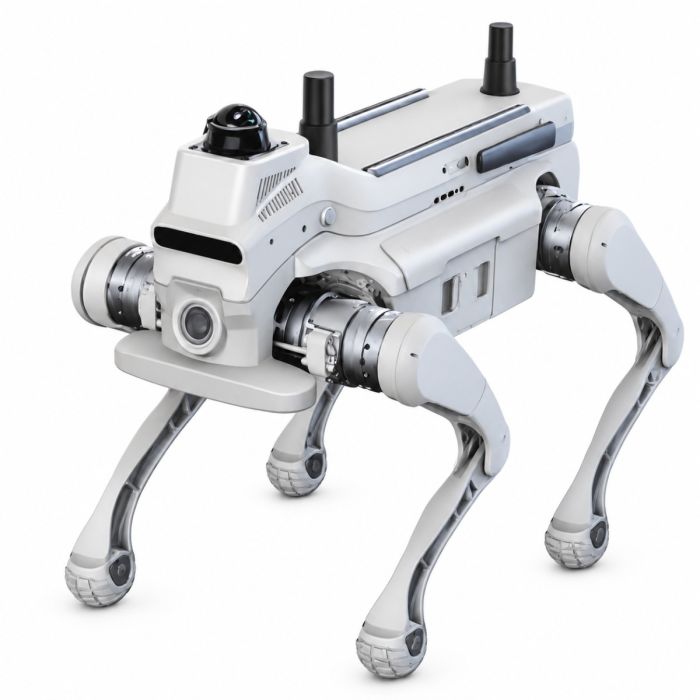
The L1 EDU has NVIDIA Orin NX computing with up to 100 TOPS. Its integrated hardware includes 3D laser radar, a depth camera, a GNSS satellite positioning module and a 5G communication module. The named sensing components are Livox Mid-360 lidar and RealSense depth cameras. Together, the documented perception arrangement brings visible light, depth vision and laser point clouds into the research platform.
The stated uses are SLAM, 3D reconstruction, autonomous navigation research and open-source development workflows. A University of Manchester team won first place at the IROS 2025 Quadruped Robot Challenge using a GENISOM L1 EDU platform. That result provides a concrete research reference, but it is not a substitute for defining the software, test conditions and integration work required by a new project.
Technical Specifications
| Specification | Value |
|---|---|
| Onboard computing performance — L1 EDU, NVIDIA Orin NX | up to 100 TOPS |
Specifications are as published by the manufacturer and are confirmed against the datasheet at quotation.
The manufacturer has not published the EDU weight, dimensions, battery capacity, runtime, maximum speed or payload, the box contents, the operating system or the wireless standards; these details are confirmed at quotation.
What does the L1 EDU hardware offer for navigation research?
The main distinction is the combination of computing and complementary sensing on a moving platform. Laser point clouds, depth information and visible-light observations give researchers different ways to describe a scene. In robotics research generally, comparing these representations helps teams investigate how a navigation method responds to geometry, visibility and changes in the surrounding environment.
The L1 EDU supplies the documented hardware foundation for that work: NVIDIA Orin NX, Livox Mid-360 lidar and RealSense depth cameras, alongside GNSS positioning and 5G communication. The presence of these components does not define a completed research workflow. Teams still need to set their own objectives for data handling, mapping, localisation, navigation and evaluation, then establish which interfaces and software resources the purchased configuration provides.
The RoamerX Pro name should not replace a written software scope. A useful quotation identifies the software package, licence terms, installation responsibilities and demonstrations required for acceptance. This separates the supported L1 EDU hardware specification from purchasing assumptions about ready-made navigation functions, and makes comparisons with other research platforms more meaningful.
Who is Genisom L1 EDU RoamerX Pro Quadruped Robot for?
This product is relevant to university laboratories, robotics educators and development teams whose work centres on mobile perception and navigation. The documented EDU use cases make it particularly pertinent to projects studying SLAM and reconstruction, rather than buyers seeking an appliance with an already defined operational task. Its place among Research Robots reflects that experimental focus.
For an academic group, the first decision is often whether the project needs the named RoamerX Pro configuration or an EDU platform with a separately specified software workflow. Buyers whose priority is the research hardware should also review the Genisom L1 EDU Quadruped Robot and compare written quotations. The available facts do not establish a software or accessory difference between those listings, so the choice should follow a documented configuration comparison.
For teaching, the platform offers a subject around which to organise perception, mapping and navigation exercises. For research procurement, the priority is more exacting: establish interface access, laboratory operating requirements and repeatable acceptance tests. In either setting, the proposed work should determine the purchase specification rather than the product name alone.
What is Genisom L1 EDU RoamerX Pro Quadruped Robot used for?
- SLAM research: Investigate how a moving robot builds a map while estimating its position within that map.
- 3D reconstruction: Explore spatial representations using the documented laser, depth and visible-light sensing arrangement.
- Autonomous navigation research: Develop experiments connecting environmental perception with movement decisions.
- Open-source development workflows: Organise research around the documented development focus and an agreed software environment.
- Robotics teaching: Use mapping and navigation projects to connect classroom concepts with physical experiments.
- Perception studies: Compare the roles of point clouds, depth observations and visible-light information in mobile robotics.
Pricing and Availability
Request a quotation for the named configuration, with the required research objectives and integration scope clearly stated. Ask for an itemised hardware and software schedule, including the supplied accessories, development resources and acceptance criteria. This gives the purchasing team a concrete basis for approval without treating an existing page description as a packing list.
Delivery, customs and support are arranged with the quotation. Include the intended destination and any institutional purchasing requirements in the enquiry, together with questions about the unpublished EDU specifications. A quotation request for Genisom L1 EDU RoamerX Pro Quadruped Robot is available on this page.
Frequently Asked Questions
Which computing platform does L1 EDU use?
L1 EDU uses NVIDIA Orin NX with up to 100 TOPS. For procurement, distinguish that stated computing capability from the memory configuration, installed applications and software access specified in the quotation.
Which sensors are documented for L1 EDU?
The documented arrangement includes Livox Mid-360 lidar, RealSense depth cameras and a GNSS satellite positioning module. A 5G communication module is also integrated, alongside the visible-light, depth-vision and laser-point-cloud perception arrangement.
Is the platform intended for SLAM and autonomous navigation?
Yes. The stated L1 EDU uses include SLAM, 3D reconstruction, autonomous navigation research and open-source development workflows. These describe its research positioning, not a promise that a particular application is delivered ready for operation.
Does the RoamerX Pro name establish the supplied software?
No. The available fact sheet does not define the RoamerX Pro software package, its licensing or its delivered functions. Request those details in the written quotation, including any required deployment and acceptance work.
Can standard L1 mobility figures be used for L1 EDU?
No. Specifications attributed to Genisom L1 or the standard L1 reseller listing should remain attached to those versions. Use an EDU-specific specification when assessing handling, transport, endurance or the suitability of a proposed experiment.
What should a laboratory define before requesting a quotation?
Describe the intended experiments, required interface access, software workflow and acceptance criteria. Include questions about the operating environment, supplied accessories and unpublished EDU specifications so that the response addresses both research and procurement needs.
Where can I buy Genisom L1 EDU RoamerX Pro Quadruped Robot and what does it cost?
The product is available through this page by quotation. Request the required configuration and support scope to obtain the commercial proposal, with delivery and customs arrangements included in the discussion.
Summary
The distance between a map on a screen and a robot navigating a real environment is where this platform's research relevance lies. L1 EDU brings documented onboard computing, complementary perception hardware, GNSS positioning and 5G communication to work on SLAM, reconstruction and autonomous navigation.
A sound purchase keeps that hardware foundation separate from assumptions about the RoamerX Pro software bundle, accessories or unpublished mobility specifications. Define the experiment, request the exact configuration and agree how it will be accepted; for that process, this page is the starting point.