
Unitree B1 Quadruped Robot
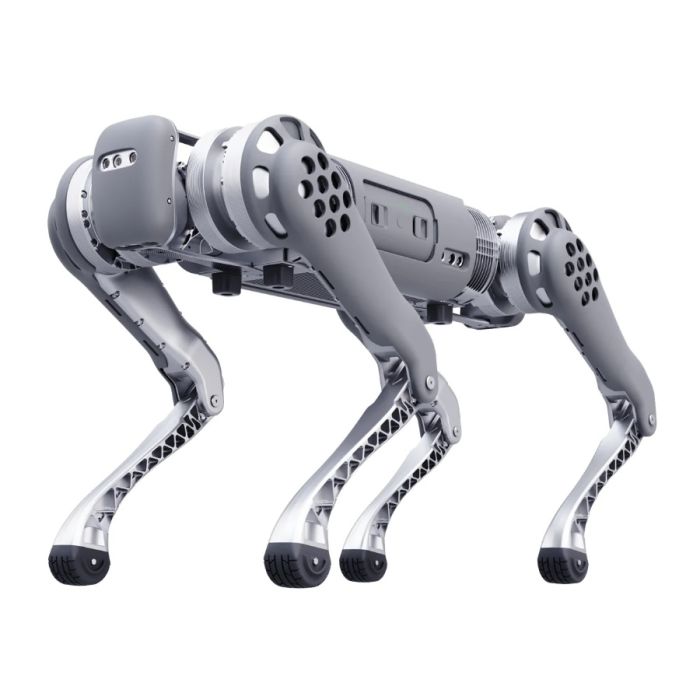
In stock
- BRAND:
- UNITREE ROBOTICS
- MODEL:
- B1
- ORIGIN:
- China
- AVAILABILITY:
- SUBJECT TO AVAILABILITY
- SKU:
- Unitree-B1
Unitree B1 Quadruped Robot
A field robotics project needs more than movement: it needs a clear relationship between the task, the equipment carried and the information collected. The Unitree B1 Quadruped Robot brings that relationship into focus as an industrial-grade quadruped with specified computing, sensing and expansion hardware. For organisations assessing walking platforms, the useful starting point is not a demonstration routine but an integration plan: what the robot must carry, how equipment will communicate and how the proposed work will be evaluated.
The product is available through this page, by quotation.
Background
Unitree Robotics and the B1 platform
Unitree Robotics identifies the B1 as an industrial-grade quadruped robot. The fact sheet names B1 as the version covered here; it does not establish a range of B1 trims or packages. This distinction matters when comparing proposals, because specifications attached to other models should not become assumptions about this product.
Quadruped robots belong to a class of mobile systems used to investigate tasks where legged movement offers an alternative to wheeled transport. Their selection is normally driven by the route, working environment and equipment requirements. A buyer evaluating this class should separate the platform's documented hardware from the wider development work needed to create a useful application.
Industrial positioning and integration hardware
The B1's stated application areas include agriculture, industry, security patrols, surveys and exploration, and public rescue. These describe application potential rather than a complete operational service. An agricultural project, for example, still needs a defined observation task, while a security project needs procedures for handling information and involving personnel.
The specified hardware provides a concrete basis for that assessment. Main control uses Intel i5-1135G7, while the sensing calculation platform lists XavierNX *3 and multiple available brands and models. Intel RealSense D430*5 is the stated sensing sensor arrangement. Expansion interfaces give integrators a further starting point for planning connections, without establishing compatibility with every external device.
Technical Specifications
| Specification | Value |
|---|---|
| Recommended carried load | Within 20kg |
| Main control CPU | Intel i5-1135G7 |
| Sensing calculation platform | XavierNX *3 |
| Sensing sensor | Intel RealSense D430*5 |
| Expansion board | Gigabit Interface*7/RS485*4/USB*5/CAN*4 |
These figures are as the manufacturer publishes them and are confirmed against the datasheet at quotation.
The manufacturer has not published the maximum walking speed, slope climbing angle, degrees of freedom, IP rating or what is in the box; these details are confirmed at quotation.
The carrying guidance is a recommendation to keep the load within 20kg during load-carrying operation. It should not be treated as a stated maximum payload or as permission to use every load arrangement. Integration planning should address mounting, balance and the intended movement task alongside the weight of the equipment.
The sensing calculation platform also lists multiple available brands and models. A procurement specification should therefore identify the required computing arrangement explicitly. The expansion interface entry describes the listed connections, not a guarantee that an instrument, controller or software package will work without additional integration.
What should buyers assess before integrating the Unitree B1 Quadruped Robot?
The first assessment is the task itself. An inspection project needs to establish what must be observed and how the result will be reviewed. A survey project needs to define the information it expects to collect. These decisions guide the equipment selection and prevent the robot's mobility from becoming a substitute for a measurable objective.
The next assessment concerns the carried equipment. The B1's load recommendation gives the project a practical boundary for planning, but weight alone does not settle the design. The mounting method, location of equipment and cable routing all belong in the engineering review. Equipment that needs power or communication should be assessed as part of the complete proposed assembly.
Computing and sensing should then be considered together. The listed CPU, sensing calculation hardware and depth sensors are useful procurement details, but they do not establish an application-specific software stack. Buyers should define which functions they will develop, which existing tools they intend to use and what information must pass between the robot and external systems.
Finally, plan an acceptance process. A controlled evaluation should use representative tasks and clear criteria for success. For Gulf projects, site-specific heat, dust, water exposure and access arrangements belong in that review; no regional suitability claim follows simply from the industrial designation. An evaluation plan also helps distinguish a promising development platform from a system ready for a particular operational duty.
Who is Unitree B1 Quadruped Robot for?
The B1 is relevant to industrial engineering teams, robotics integrators and organisations investigating mobile sensing in field settings. Its documented computing and interfaces make hardware planning central to the purchase decision. Buyers with a defined task and the resources to assess integration have a stronger basis for selection than those seeking an unspecified, ready-made automation service.
Agricultural organisations can examine its relevance to observation work, while industrial teams can evaluate inspection concepts. Security, surveying and rescue organisations can assess the manufacturer's stated application areas against their own procedures. In each case, the project needs an accountable operator, a suitable evaluation environment and a clear understanding of how collected information will be used.
The Unitree B1 category provides a product-specific browsing route. No sibling version is recommended here because the supplied facts do not establish comparative suitability. A meaningful alternative-model decision needs matching evidence about the task, hardware and operating requirements, rather than assumptions based on a product name.
What is Unitree B1 Quadruped Robot used for?
- Agricultural observation: Evaluate mobile sensing concepts around crops and agricultural work areas, with the observation task defined before deployment.
- Industrial inspection: Develop walking-platform inspection workflows that connect equipment selection with a documented review process.
- Security patrol evaluation: Investigate patrol applications within site rules, operator responsibilities and appropriate information-handling procedures.
- Surveying: Assess mobile data-collection arrangements against the survey method and the required output.
- Exploration: Test robotic observation concepts in controlled field exercises before committing to operational use.
- Public rescue development: Explore support roles through supervised trials rather than treating the platform as a complete rescue solution.
Pricing and Availability
Request a quotation for the Unitree B1 Quadruped Robot with a description of the intended application, carried equipment and computing requirements. The proposal should identify the selected configuration and package contents, giving procurement and engineering teams a shared basis for review.
Delivery, customs and support are arranged with the quotation. Include any acceptance testing, documentation or operator preparation required by your organisation in the enquiry, so these needs form part of the discussion rather than assumptions made after selection. A quotation request for the Unitree B1 Quadruped Robot is available on this page.
Frequently Asked Questions
Is the B1 an industrial quadruped?
Yes. Unitree Robotics identifies the B1 as an industrial-grade quadruped robot, with application potential across agriculture, industry, security patrols, surveys and exploration, and public rescue.
How much equipment should the B1 carry?
The manufacturer recommends keeping carried weight within 20kg during load-carrying operation. This is a load recommendation, not a stated maximum payload, and the proposed mounting arrangement belongs in the integration review.
What main control processor does it use?
The main control CPU is Intel i5-1135G7. That identifies the processor but does not establish compatibility with a particular application or software environment.
What sensing hardware is listed?
The sensing sensor entry is Intel RealSense D430*5, and the sensing calculation platform lists XavierNX *3. Multiple brands and models are available for the sensing calculation platform, so specify the required arrangement in the quotation request.
Which expansion interfaces are specified?
The expansion board lists Gigabit Interface*7/RS485*4/USB*5/CAN*4. Assess the communication, electrical and software requirements of external equipment before treating an interface as a complete integration solution.
Does the page establish a ready-to-deploy inspection system?
No. The documented platform hardware and application areas do not establish a complete inspection workflow, installed application software or included accessory package; these requirements belong in the project specification.
Where can I buy Unitree B1 Quadruped Robot and what does it cost?
The product is available through this page by quotation. Submit the intended task and configuration requirements to obtain a proposal covering the equipment and arrangements needed for your project.
Summary
A useful field robotics purchase connects movement to a defined task, rather than treating movement as the result in itself. The B1 provides documented industrial positioning, computing, sensing and interfaces for buyers to assess against that task. Its carrying recommendation gives equipment planning an additional boundary, while the unresolved operational and package details remain procurement questions.
Begin with the information you need to collect, the equipment you intend to carry and the conditions under which the project will be evaluated. Bring those requirements into the quotation discussion to establish an appropriate configuration and acceptance plan. For an informed assessment of the Unitree B1 Quadruped Robot, this page is the starting point.
Specifications
General
Physical
Performance
Battery + Power
What's included
Related Products
Out of stock