
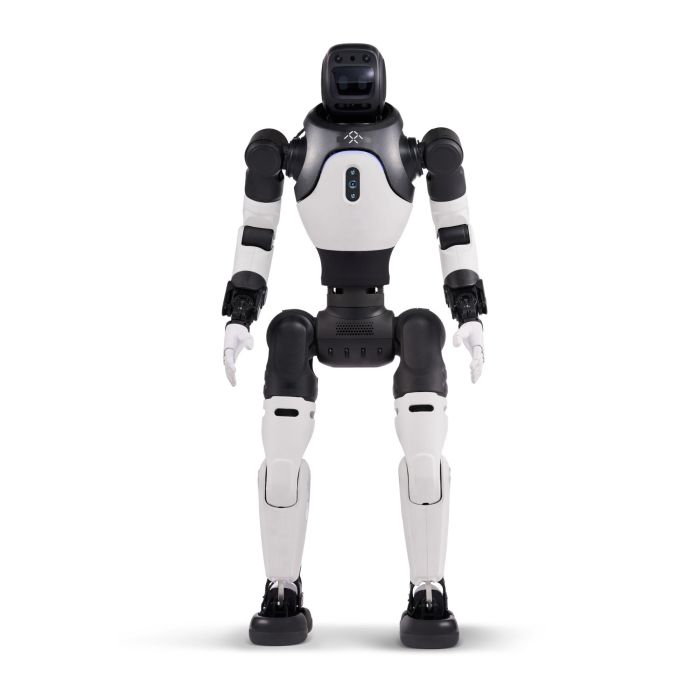
FF Master Edu Humanoid Robot
In stock
- BRAND:
- FARADAY FUTURE
- ORIGIN:
- United States
- Warranty:
- 12 MONTHS
- AVAILABILITY:
- USUALLY SHIPS IN 3-5 BUSINESS DAYS
- SKU:
- FF-Master-Edu
FF Master Edu Humanoid Robot
The distance between a robotics idea and a physical experiment is where many important lessons emerge. Movement introduces questions of balance, control and energy that a screen alone cannot resolve. FF Master Edu Humanoid Robot brings that physical dimension to education, research and interactive development. Its compact humanoid format combines articulated movement with support for interaction and locomotion platforms, giving teams a basis for investigating how a robot moves and how people engage with it. The purchasing decision should begin with the experiments a team intends to conduct, rather than appearance alone.
The product is available through this page, by quotation.
Background
FARADAY FUTURE and the Master Edu identity
Master Edu is a FARADAY FUTURE humanoid designed for education, research and interactive development. The product information distinguishes Master Edu from Master, so the Edu version should remain the reference point when assessing specifications and preparing a purchase enquiry. A shared family name does not establish that different versions have identical hardware, software access or intended applications.
For an educational institution, that distinction matters throughout procurement. Teaching staff, technical teams and purchasing departments need a common description of the equipment being considered. Keeping the version explicit helps align the proposed robot with the learning programme and prevents assumptions based on another member of the range. The figures on this page relate to Master Edu.
A platform spanning interaction and movement
Master Edu supports the II Platform for intelligent and interactive capabilities and the LM Platform for locomotion and manipulation. This separates two related areas of robotics: how a system engages with people, and how it controls physical movement. OTA updates add new features over time.
In robotics education generally, these areas are often studied together. An interaction can initiate a movement, while the physical result can inform the next stage of an exercise. Planning such work requires attention to the available development environment as well as the mechanism itself. Institutions should define their intended workflow before selecting a platform, including who will prepare experiments, supervise sessions and assess results.
Technical Specifications
| Specification | Master Edu |
|---|---|
| Height | 1.31 m |
| Weight | 35 kg |
| Degrees of freedom | 25 |
| Peak torque | Up to 120 Nm |
| Maximum speed | 1.8 m/s |
| Battery capacity | 500 Wh |
| Continuous operation | Up to 2 hours |
| Full charging time | Under 1.5 hours |
Specifications are as published by the manufacturer and are confirmed against the datasheet at quotation.
The manufacturer has not published the IP rating, onboard compute, operating system or colour; these details are confirmed at quotation.
What should you assess before choosing Master Edu for a robotics lab?
Begin with the relationship between the research question and the robot's movement. Master Edu has 25 degrees of freedom, peak torque of up to 120 Nm and a maximum speed of 1.8 m/s. These are distinct characteristics, not interchangeable measures of performance. Degrees of freedom describe articulation, torque concerns rotational effort, and speed describes movement rate. None alone establishes the outcome of a particular experiment.
A useful project brief therefore describes the intended task before listing preferred specifications. For locomotion work, explain the movements to be investigated and the setting in which testing will take place. For interactive development, describe the intended exchange between the robot and its users. This makes the technical discussion more productive than asking for a general assurance that a humanoid is suitable for research.
Power planning deserves the same attention. Master Edu uses a swappable 500 Wh battery, provides up to 2 hours of continuous operation and reaches a full charge in under 1.5 hours. Organise teaching and development sessions around preparation, operation, review and charging rather than treating runtime as an uninterrupted timetable allocation. A swappable battery is a hardware characteristic; it does not establish that additional batteries are included.
Finally, define the required development access. Support for the II Platform and LM Platform establishes the platform names and their respective focus, but a project brief should still identify the interfaces, tools and permissions its work requires. Resolve those requirements during quotation before committing a curriculum or research plan to a specific workflow.
Who is FF Master Edu Humanoid Robot for?
Master Edu is directed towards education, research and interactive development. Relevant buyers include university robotics groups, teaching laboratories and development teams seeking a humanoid platform for structured investigation. Within those settings, the strongest starting point is a defined programme: what participants should learn, what researchers intend to measure, or what interaction developers want to explore.
Teaching teams should consider how the robot will fit into supervised activities, preparation time and assessment. Research groups should identify the control and observation requirements of their proposed experiments. Demonstration teams should define the audience experience and operating arrangements before planning an event around the equipment.
Buyers comparing the wider Humanoids category should distinguish educational experimentation from other purchasing objectives. A humanoid form does not, by itself, establish suitability for a particular workplace task. For Master Edu, keep the enquiry centred on its stated educational, research and interactive role and the practical requirements of the intended setting.
What is FF Master Edu Humanoid Robot used for?
- Robotics teaching: Use a physical humanoid as the focus for structured lessons about articulation, movement and system-level planning.
- Locomotion research: Frame investigations around movement questions and the LM Platform's locomotion focus.
- Manipulation development: Explore manipulation-related project requirements within the scope of the LM Platform.
- Interactive development: Build project briefs around intelligent and interactive capabilities supported through the II Platform.
- Supervised demonstrations: Present robotics concepts through planned activities that connect technical explanation with physical movement.
- Interdisciplinary projects: Bring mechanical, control and interaction questions into a shared educational or research programme.
Pricing and Availability
Request a quotation for FF Master Edu Humanoid Robot with a description of the intended application, institution or project setting, and required development workflow. Include any training, documentation or integration requirements in the enquiry so that they form part of the purchasing discussion rather than an assumption.
Delivery, customs and support are arranged with the quotation.
For a Gulf-based project, identifying the destination and installation context at the outset helps structure that discussion. A quotation for FF Master Edu Humanoid Robot is available on this page.
Frequently Asked Questions
Is Master Edu intended for education or research?
It is designed for education, research and interactive development. Begin by defining the learning objectives or experimental tasks, then use those requirements to guide the technical enquiry.
How large is Master Edu, and what does it weigh?
Master Edu stands 1.31 m tall and weighs 35 kg. These figures are relevant to workspace and handling planning, which should also address access, supervision and local operating procedures.
How many degrees of freedom does Master Edu have?
Master Edu has 25 degrees of freedom. When preparing a movement-based project, describe the required actions in addition to referring to the articulation count, because the count alone does not define a complete task.
What battery does Master Edu use?
It uses a swappable 500 Wh battery and provides up to 2 hours of continuous operation. A full charge takes under 1.5 hours; confirm the required charging arrangements and package contents during the quotation process.
Which platforms does Master Edu support?
Master Edu supports the II Platform for intelligent and interactive capabilities and the LM Platform for locomotion and manipulation. Describe the development access your project needs so that the quotation addresses the intended workflow.
Does Master Edu receive OTA updates?
Yes, OTA updates add new features over time. Base project acceptance criteria on the functionality agreed for the purchase, rather than making a teaching programme dependent on future additions.
Where can I buy FF Master Edu Humanoid Robot and what does it cost?
The product is available through this page by quotation. Submit your application and destination details to request commercial terms and discuss delivery, customs and support.
Summary
Turning a robotics idea into a physical experiment requires more than selecting a humanoid shape. Master Edu brings together an educational and research focus, articulated movement, a swappable battery and support for interaction and locomotion platforms. Its value to a particular team depends on how those characteristics align with a clearly defined programme.
Start with the movements, interactions and learning outcomes that matter, then resolve development access and operating arrangements through the quotation process. For institutions seeking to connect robotics concepts with practical investigation, this page is the starting point.