
Kepler Robotics K1 Humanoid Robot
Out of stock
- ماركة:
- KEPLER
- نموذج:
- K1
- ORIGIN:
- الصين
- AVAILABILITY:
- SUBJECT TO AVAILABILITY
- SKU:
- Kepler-Robotics-K1
Kepler Robotics K1 Humanoid Robot
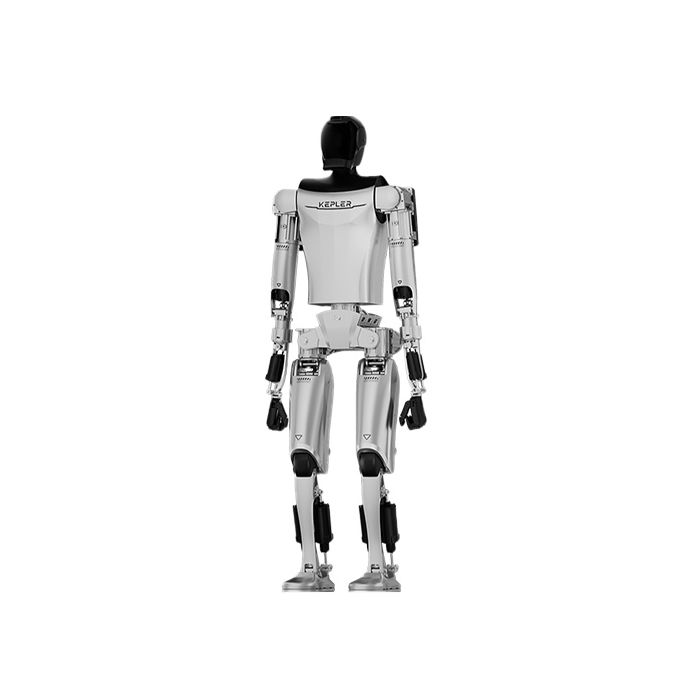
The Kepler Robotics K1 Humanoid Robot is a bipedal, human-form robot developed by Kepler, a Chinese robotics manufacturer that has emerged as a notable player in the fast-growing humanoid robotics sector. The K1 combines legged locomotion, human-like dexterous manipulation and an AI-driven perception stack, with the goal of operating in environments that were built for people: factory floors, warehouses, service spaces and research facilities. This page summarizes what the manufacturer and public listings describe about the platform, outlines its intended applications, and explains how procurement typically works for humanoid platforms of this class.
Background
Humanoid robots have moved from research curiosities to serious commercial programs in only a few years, and the K1 sits squarely within that shift. Understanding where the platform comes from helps set expectations for what it is designed to do.
Kepler Robotics and China's humanoid wave
Kepler is part of a wave of Chinese robotics companies investing heavily in general-purpose humanoid platforms. The strategic logic is straightforward: most workplaces are designed around the human body, so a robot with human proportions, two legs and two dexterous arms can, in principle, be deployed into existing facilities without redesigning the environment. Kepler's catalog has grown to include multiple humanoid models, and the K1 is positioned as an innovative model in the company's line-up: a robot that showcases a blend of agility, intelligence and human-like dexterity. Public listings identify the K1 as a humanoid-type robot with China as its country of origin.
Design philosophy of the K1
The K1's published positioning emphasizes three pillars. The first is mobility: the robot is described as walking, running and performing complex maneuvers with a notable level of agility and stability, allowing operation across a range of environments from industrial settings to domestic-style spaces. The second is manipulation: the K1 is equipped with sophisticated manipulators intended to grasp, manipulate objects and interact with its surroundings in ways that resemble human movements. The third is intelligence: the platform is described as running advanced AI algorithms for object recognition, scene understanding, decision-making and adaptation, supported by a perception suite that includes cameras and depth sensors. Together these pillars define the K1 as a general-purpose humanoid platform rather than a single-task machine.
Technical Specifications
Kepler has not published a full numeric datasheet for the K1 in the sources available for this page, so the table below records the confirmed classification data and capability descriptions rather than unverified figures.
| Attribute | Reported value |
|---|---|
| Brand | Kepler |
| Model | K1 |
| Robot type | Humanoid |
| Country of origin | China |
| Locomotion | Bipedal walking and running, complex maneuvers (manufacturer description) |
| Manipulation | Human-like dexterous manipulators for grasping and object handling |
| Perception | Cameras and depth sensors; object recognition and scene understanding |
| Intelligence | AI-driven decision-making, adaptation and learning over time |
| Intended environments | Industrial, logistics, service and research settings |
| Included | Kepler Robotics K1 (K1) unit |
Detailed numeric specifications such as height, weight, payload, battery runtime and joint count have not been confirmed in the sources used for this page and should be verified against the current official Kepler datasheet during quotation.
How does the Kepler K1 move and manipulate objects?
The K1's headline capability is fluid bipedal locomotion. Legged locomotion also means the robot's footprint and reach are similar to a person's, simplifying deployment planning. On the manipulation side, the K1 carries dexterous manipulators designed for precision tasks: grasping varied objects, handling parts and interacting with fixtures designed for human hands. The combination matters more than either capability alone. A robot that can both move through a facility and manipulate objects within it can take on end-to-end tasks — collecting, transporting and placing items — rather than only point tasks at a fixed station.
What makes the K1 an intelligent platform?
Kepler describes the K1 as an intelligent machine, not merely a mechanical one. The platform is powered by advanced AI algorithms that allow it to perceive its environment, make decisions and adapt to changing conditions. Its perception suite — cameras and depth sensors — supports object recognition, scene understanding and navigation through complex environments, and the system is described as being able to learn and improve performance over time. In practical terms, this positions the K1 for semi-structured environments where conditions vary: a warehouse where inventory locations change, an inspection route where anomalies must be noticed, or a service setting where people move unpredictably.
Who is the Kepler Robotics K1 Humanoid Robot for?
The K1 is aimed at organizations that want a general-purpose humanoid platform rather than a fixed single-task machine. Typical profiles include manufacturers evaluating humanoid labor for assembly-line support, machine tending and inspection in environments built for people; logistics and warehousing operators exploring humanoid platforms for order fulfillment and inventory tasks; research institutions and universities that need a full-size bipedal platform for locomotion, manipulation and AI research; systems integrators building humanoid-based solutions for clients; and innovation teams running pilots to understand where humanoid robots fit their operations. Because humanoid platforms are still an emerging category, buyers should plan for integration effort, operator training and staged deployment rather than expecting turnkey drop-in automation.
What is the Kepler Robotics K1 Humanoid Robot used for?
- Industrial automation support — assisting with tasks on and around assembly lines, performing inspections and handling materials in environments designed for human workers.
- Logistics and warehousing — supporting order fulfillment, inventory movement and repetitive handling tasks where a mobile, two-armed robot adds flexibility.
- Hazardous or unpleasant environment tasks — taking on inspections and interventions in settings where reducing human exposure is desirable, subject to site assessment.
- Research and development — serving as a full-size humanoid platform for academic and corporate research into locomotion, manipulation, perception and embodied AI.
- Service and customer-facing pilots — exploring assistance, guidance and interaction roles in commercial spaces as part of controlled deployments.
- Technology demonstration and workforce planning — helping organizations evaluate humanoid robotics readiness, build internal expertise and plan future automation roadmaps.
Pricing and Availability
As a full-size humanoid platform, the K1 is not sold at a fixed retail list price. Final cost depends on configuration, software scope, support and training packages, import logistics and delivery region, and availability is subject to confirmation with the manufacturer's supply channel at the time of order. Purchase details are confirmed through quotation. To receive current pricing, lead times and configuration options for the Kepler Robotics K1, submit a request through the quotation option on this page and a specialist will follow up with the exact commercial terms for your project.
Frequently Asked Questions
What is the Kepler Robotics K1?
The K1 is a bipedal humanoid robot from Chinese manufacturer Kepler, combining legged locomotion, dexterous manipulation and AI-driven perception for use in industrial, logistics, service and research environments.
Can the Kepler K1 walk and run?
Yes. The manufacturer describes the K1 as capable of walking, running and performing complex maneuvers with a notable level of agility and stability, enabling operation in a wide range of human-centric environments.
What can the K1 do with its hands?
The K1 is equipped with sophisticated manipulators described as performing precise grasping and object manipulation that closely resembles human movements. Task-specific performance should be validated during technical evaluation.
What sensors and AI does the K1 use?
The platform carries cameras and depth sensors and runs AI algorithms for object recognition, scene understanding, navigation and adaptive decision-making, with the ability to improve performance over time per the manufacturer's description.
Which industries is the K1 intended for?
Published positioning covers industrial automation, logistics and warehousing, healthcare-adjacent assistance, customer service and research and development, with real deployments depending on site assessment and integration planning.
Are full technical specifications available?
A complete numeric datasheet (height, weight, payload, runtime, joint count) was not published in the sources used for this page. Current official specifications are provided during the quotation process.
Where can I buy Kepler Robotics K1 Humanoid Robot and what does it cost?
The K1 is available through quotation. Pricing depends on configuration, software, support and logistics, so no fixed price is published; submit a quotation request on this page to receive current pricing and availability.
Summary
The Kepler Robotics K1 represents the current direction of general-purpose robotics: a bipedal, human-form platform that walks and runs with stability, manipulates objects with human-like dexterity and perceives its environment through cameras, depth sensors and AI software. Built by Kepler in China and positioned for industrial automation, logistics, service pilots and research, the K1 is best understood as a flexible platform whose value emerges through integration into real workflows. Because the humanoid category is evolving quickly and full numeric specifications are confirmed at quotation, buyers should validate current datasheets, autonomy scope and support terms against their specific requirements. For teams evaluating the K1 for their automation or research roadmap, this page is the starting point.