
X1 Eve Wheeled Humanoid Robot
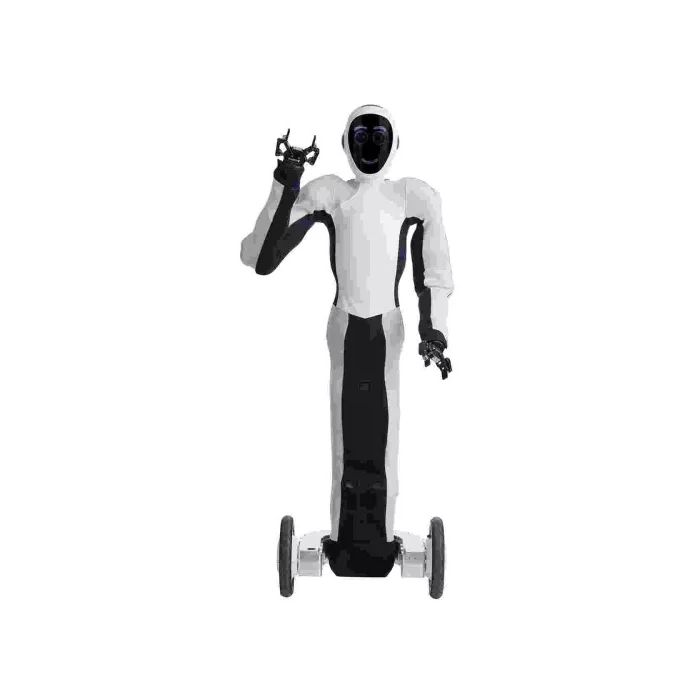
In stock
- BRAND:
- X1
- MODEL:
- EVE
- AVAILABILITY:
- SUBJECT TO AVAILABILITY
- SKU:
- X1-Eve
X1 Eve Wheeled Humanoid Robot
Automation in a shared workplace is not only about movement; it is about knowing when a person needs to take control. The X1 Eve Wheeled Humanoid Robot brings that relationship into focus through autonomous navigation and remote human operation. EVE collects data from the real world, uses cameras and sensors to interact with its surroundings, and travels on multi-terrain wheels. For an organisation assessing humanoid robotics, the central question is how those capabilities fit a defined task, a supervised operating environment and the responsibilities of the team working alongside it.
The product is available through this page, by quotation.
Background
1X Technologies and its origins
1X, formerly Halodi Robotics, was founded in 2014 by Bernt Øivind Børnich. EVE belongs to the company's working humanoid approach, bringing physical interaction and real-world data collection together. This places the platform within a field where useful operation depends on more than an isolated demonstration: navigation, perception, movement and human supervision must work together in the intended setting.
For procurement teams, that background provides context rather than a substitute for deployment assessment. A humanoid project needs a clear description of the work, the people responsible for it and the environment in which it will operate. The manufacturer's history identifies the organisation behind EVE; the proposed application determines which technical and operational questions matter most.
Embodied learning with human oversight
EVE operates autonomously by default, using artificial intelligence to navigate a workspace. Its advanced embodied learning models support movement around corners and the use of elevators, with everyday task efficiency improving over time. Cameras and sensors provide perception, while a human operator can control a fleet of EVEs, access their cameras and direct their movement remotely.
The computing architecture pairs Intel i7 for real-time control with Nvidia Xavier for AI inference. Actuation uses 1X Technologies Revo1 quasi direct-drive technology. The safety design includes soft, organically-inspired mechanics, and 1X tests every EVE in real-world scenarios before deployment. These features belong in a wider operational discussion covering trained teams, access rules and the circumstances in which an operator intervenes.
Technical Specifications
| Specification | Value |
|---|---|
| Height | 6 foot 2 inches |
| Weight | 192 pounds |
| Top speed | 9 miles/hour |
| Carry capacity | 33 pound |
| Manufacturer run time | 6-hour run time |
| Run time and charge time | up to 6 hours on a 1-hour charge |
| Front cameras | 2 |
| Rear cameras | 1 |
| Total degrees of freedom | 25 |
| Degrees of freedom breakdown | Neck: 1 DoF; Arm: 7 DoF x 2; Leg: 6 DoF x 1; Hand: 1 DoF x 2; Wheels 1 DoF x 2 |
Specifications are as published by the manufacturer and are confirmed against the datasheet at quotation.
The manufacturer has not published full dimensions, the IP rating, connectivity, operating temperature, hand and gripper type, package contents or power consumption; these details are confirmed at quotation.
How does EVE combine autonomy with remote control?
Autonomous operation and human control are complementary parts of EVE's operating model. The robot uses AI to navigate by default, while an operator can view camera feeds and control movement from a distance. This gives buyers a concrete starting point for planning supervision: identify the tasks assigned to autonomous operation and define the situations that require human involvement.
The fleet capability is particularly relevant to organisations considering oversight across several robots. The manufacturer states that a human operator can control a fleet of EVEs; it does not provide a fleet size or an operator-to-robot ratio in the supplied information. A deployment plan therefore needs to establish supervision duties, escalation procedures and operator workload rather than assume that fleet control removes the need for trained personnel.
EVE's camera arrangement consists of two front cameras and one rear camera. That arrangement supports the discussion of perception and remote viewing, but it does not establish image resolution, recording policies or data retention. Buyers handling workplace images should define their own governance requirements and request the necessary technical information before agreeing an operating model.
Likewise, navigation around corners and taking elevators are specific capabilities, not a blanket assurance that every building is suitable. Route assessment should address circulation space, lift access, pedestrian interaction and the task itself. The useful comparison is between the proposed workflow and the robot's documented capabilities, not between a broad humanoid label and an assumed level of independence.
Who is X1 Eve Wheeled Humanoid Robot for?
EVE is relevant to robotics teams, facilities organisations and research groups evaluating physical automation in human environments. Its combination of real-world data collection, autonomous navigation and remote control gives these buyers distinct questions to investigate. An operations team will focus on a repeatable workflow; a research team will focus on interaction and learning; a facilities team will focus on routes, oversight and the people sharing the space.
For buyers comparing Wheeled Humanoids, the key distinction is the relationship between wheeled mobility and the intended environment. The wider Humanoids category provides context for alternative robot forms, but category membership alone does not establish task suitability. Selection should begin with the work to be performed and the constraints of the site.
In Gulf workplaces, project planning should also clarify the responsibilities of the local operating team, access permissions and support arrangements. These are procurement considerations, not additional product specifications. A buyer with a defined task and an accountable supervision structure is better placed to evaluate EVE than one seeking an unspecified replacement for human work.
What is X1 Eve Wheeled Humanoid Robot used for?
- Real-world data collection: EVE collects data through physical operation, bringing embodied learning into an actual working environment.
- Workspace navigation evaluation: Teams can assess autonomous movement against planned routes, corners and elevator access.
- Remote operational oversight: Human operators can access camera views and direct movement from a distance.
- Fleet supervision planning: Organisations can examine how shared human oversight fits a proposed group of EVEs.
- Object-handling assessment: Buyers can evaluate proposed carrying tasks against the stated capacity and the required handling method.
- Human–robot workflow development: Trained teams can define procedures for shared-space operation and human intervention.
Pricing and Availability
Request a quotation for X1 Eve Wheeled Humanoid Robot with a description of your intended application, operating site and supervision requirements. The enquiry should identify what the robot must do, what it will encounter along the route and which technical details your organisation needs before approving the project.
Delivery, customs and support are arranged with the quotation.
Use the quotation process to establish the proposed configuration, package contents, training arrangements and acceptance criteria. This keeps the commercial discussion tied to a specific deployment rather than a general description of humanoid robotics. A quotation request for this product is available on this page.
Frequently Asked Questions
Does EVE operate autonomously?
Yes. EVE operates autonomously by default, using artificial intelligence to navigate a workspace. Human operators can also access its cameras and control its movement remotely.
Can a human operator control several EVEs?
A human operator can control a fleet of EVEs and use their cameras for remote oversight. The supplied information does not specify a fleet size, so the proposed supervision arrangement needs to be established for the project.
Can EVE use elevators?
EVE's multi-terrain wheels can navigate around corners and take elevators. A site assessment should still establish the intended route, access arrangements and interaction with other building users.
How long does EVE run between charges?
The manufacturer states a 6-hour run time and up to 6 hours on a 1-hour charge. Buyers should include their intended work pattern and charging arrangements in the quotation enquiry.
What can EVE carry?
EVE has a stated carry capacity of 33 pound. Suitability for a particular object also requires a handling assessment because the hand and gripper type is not published in the supplied information.
How is safety addressed?
EVE uses soft, organically-inspired mechanics, and 1X tests every EVE in real-world scenarios before deployment. The manufacturer describes operation with trained teams; buyers should establish site-specific procedures and operator responsibilities.
Where can I buy X1 Eve Wheeled Humanoid Robot and what does it cost?
The product is available through this page by quotation. Submit your application and deployment requirements to obtain a proposal covering the product and the agreed arrangements.
Summary
EVE's defining procurement question is the balance between autonomous work and accountable human oversight. Its wheeled navigation, camera-based perception, remote fleet control and real-world learning provide concrete capabilities to assess, while the unpublished technical details remain part of the quotation discussion.
A successful evaluation starts with a task, a route and a team responsible for operation. Those elements turn a humanoid enquiry into a practical project brief and make it possible to judge the platform against actual workplace needs. For that assessment and the quotation that follows, this page is the starting point.