
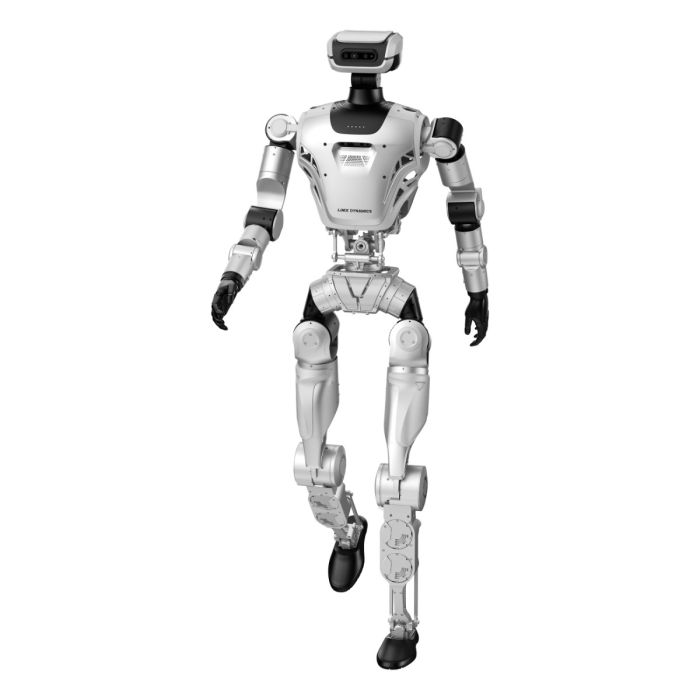
LimX Oli EDU Full-Size General Purpose Open Source Humanoid Robot
In stock
- BRAND:
- LIMX
- MODEL:
- OLI EDU
- ORIGIN:
- China
- Warranty:
- 12 MONTHS
- AVAILABILITY:
- ALLOW 2-4 WEEKS FOR DELIVERY
- SKU:
- LimX-Oli-EDU
LimX Oli EDU Full-Size General Purpose Open Source Humanoid Robot
A research programme needs more than a compelling demonstration: it needs a platform that fits the questions its team intends to investigate. The LimX Oli EDU Full-Size General Purpose Open Source Humanoid Robot brings that purchasing decision into focus through human-scale dimensions and a series-level development environment spanning Python, simulation and voice interaction. For universities and robotics laboratories, the important distinction is between selecting a humanoid and defining a workable research programme around it. EDU provides a concrete starting point for that discussion, with physical dimensions and electrical specifications that help buyers frame their requirements.
The product is available through this page, by quotation.
Background
LimX Dynamics and embodied intelligence
LimX Dynamics is a Shenzhen-based company focused on embodied intelligence and legged robotics. Its Oli range is positioned as a full-size, general-purpose humanoid robot series. This places the product within a field concerned with the relationship between software, movement and physical interaction, rather than software reasoning alone. In this class of robotics, a useful experiment connects a computational objective with a body, an environment and a clear method of evaluation.
For an academic buyer, that context matters because humanoid projects cross disciplinary boundaries. Mechanical engineering, control theory, software development and human–robot interaction often contribute to the same programme. A sensible procurement brief therefore begins with the intended investigation: teaching programming, studying movement, examining interaction or developing an experimental application. The robot's role follows from that brief, rather than from its appearance or the general ambitions of humanoid robotics.
Oli EDU within the Oli series
The sources identify Lite, EDU and Super versions of Oli. EDU has a stated height of 165 cm / 5′5″, a shoulder width of 55 cm / 21.7 in and an arm length of 70 cm / 27.6 in. These dimensions give laboratories concrete information for considering workspace layout and experimental geometry. They do not, by themselves, establish lifting capability, task performance or suitability for an uncontrolled environment.
The Oli series supports Full Python Development and simulation platforms including NVIDIA Isaac Sim, Mujoco and Gazebo. Its self-developed voice interaction system supports natural bilingual conversation in Chinese and English, together with voice-based control. The series description also gives up to 31 DoF. That is a series-level maximum, not an EDU-specific joint count. Keeping the distinction between series information and version-specific figures is important when writing an equipment specification or comparing quotations.
Technical Specifications
| Specification | Oli EDU value |
|---|---|
| Height | 165 cm / 5′5″ |
| Shoulder width | 55 cm / 21.7 in |
| Arm length | 70 cm / 27.6 in |
| Battery capacity | 9,500 mAh |
| Charger | 58.8 V / 10 A |
Specifications are as published by the manufacturer and are confirmed against the datasheet at quotation.
The manufacturer has not published the ingress protection rating, charge time, payload of both arms combined, operating temperature range, walking speed in m/s, shipping dimensions or operating system; these details are confirmed at quotation.
The dimensions are useful inputs to a laboratory planning exercise, while the battery and charger figures belong in the equipment review. Battery capacity alone does not establish operating duration, and charger ratings alone do not establish a charging schedule. A purchasing team should define its intended session structure and ask for the relevant operating documentation before finalising an experimental timetable.
What should researchers evaluate before choosing LimX Oli EDU?
The strongest starting point is the connection between the proposed project and the stated development tools. Python support matters to teams that organise their teaching or research around that language. Support for NVIDIA Isaac Sim, Mujoco and Gazebo also gives buyers specific simulation environments to discuss with their technical staff. The next step is to define the required workflow, including the models, interfaces and examples needed for the chosen project.
Simulation support is not the same thing as a completed research workflow. In humanoid research generally, teams must decide how experiments are represented, how results are recorded and how changes are evaluated. A buyer should put those requirements into the quotation brief instead of assuming that every tool, controller or example is included. This keeps the discussion centred on deliverables and avoids treating a broad platform capability as a guarantee of a particular experiment.
Voice interaction adds another dimension to evaluation. Chinese and English conversation and voice-based control are stated Oli series capabilities. For a Gulf institution, the documented language pair is an important selection detail: Arabic voice interaction is not established in the supplied material. Researchers interested in multilingual interaction should specify their language requirements and test objectives explicitly, alongside any requirements for the surrounding classroom or demonstration environment.
Who is LimX Oli EDU for?
LimX Oli EDU is relevant to university departments, robotics laboratories and development teams evaluating a full-size humanoid for structured experimentation. The combination of EDU-specific physical figures and Oli series software capabilities gives these buyers a basis for a technical discussion. It is particularly useful to distinguish the needs of a teaching programme from those of a research group: the former often prioritises repeatable exercises and documentation, while the latter begins with a defined experimental question.
Teams exploring Research Robots should compare the proposed platform against their available supervision, workspace and software experience. Buyers reviewing Bipedal Humanoids should also identify which parts of their programme genuinely require a humanoid form. These are project-planning considerations, not claims that a particular task is supplied ready to run.
The range also includes LimX Oli Lite Full-Size General Purpose Humanoid Robot and LimX Oli Super Full-Size General Purpose Humanoid Robot. The supplied facts do not establish comparative equipment or performance differences between those versions and EDU. Buyers should request a version-specific comparison rather than select a sibling on the basis of its name alone.
What is LimX Oli EDU used for?
- Robotics teaching: Frame supervised learning projects around humanoid robotics and the Oli series' Python development support.
- Simulation studies: Plan experiments using the stated support for NVIDIA Isaac Sim, Mujoco and Gazebo.
- Embodied intelligence research: Investigate how software objectives relate to physical behaviour within a defined laboratory programme.
- Human–robot interaction: Develop study plans around the series' Chinese and English conversation and voice-based control.
- Workspace planning: Use EDU's stated body dimensions to assess experimental layouts before specifying an installation.
- Platform evaluation: Establish requirements and acceptance criteria for a humanoid research project before committing to an application.
Pricing and Availability
Request a quotation for LimX Oli EDU with a description of your institution, intended research or teaching work, and required development environment. A useful enquiry also identifies the documentation, software access and experimental interfaces your team needs. The supplied material does not define a standard package of accessories, so the quotation should establish the exact scope of supply.
Delivery, customs and support are arranged with the quotation.
For a version-specific proposal and confirmation of the project requirements, request the quotation available on this page.
Frequently Asked Questions
How large is LimX Oli EDU?
Oli EDU measures 165 cm / 5′5″ in height, with a shoulder width of 55 cm / 21.7 in and an arm length of 70 cm / 27.6 in. Use these dimensions as inputs to workspace planning rather than as a substitute for an installation assessment.
Does LimX Oli EDU support Python development?
Full Python Development is a stated capability of the Oli series. Define the interfaces, examples and software access required by your project when requesting the EDU quotation.
Which simulation platforms does the Oli series support?
The stated platforms include NVIDIA Isaac Sim, Mujoco and Gazebo. Specify your preferred environment and required workflow in the technical enquiry.
Does it support Arabic voice interaction?
The stated Oli series voice capabilities are natural bilingual conversation in Chinese and English, plus voice-based control. Arabic support is not established in the supplied material.
How many degrees of freedom does EDU have?
The Oli series description states up to 31 DoF, but the supplied facts do not give an EDU-specific count. Request the EDU joint configuration as part of the technical quotation.
What does Open Source mean for this product?
Open Source appears in the product name, but the supplied material does not specify a licence, repository or the scope of source-code access. Ask for those details before making them a requirement of your research or teaching programme.
Where can I buy LimX Oli EDU and what does it cost?
The product is available through this page by quotation. Submit your project requirements to obtain the commercial proposal and the agreed scope of supply.
Summary
A productive humanoid programme begins with a research question, not simply a demonstration. LimX Oli EDU offers documented human-scale dimensions, battery and charger figures, alongside the Oli series' Python development, simulation and bilingual voice capabilities. The purchasing task is to connect those facts to the intended experiments while establishing the exact EDU configuration, software access and supplied equipment. For a quotation built around that programme, this page is the starting point.