
Alpha Robotics Timo AI Reception Robot
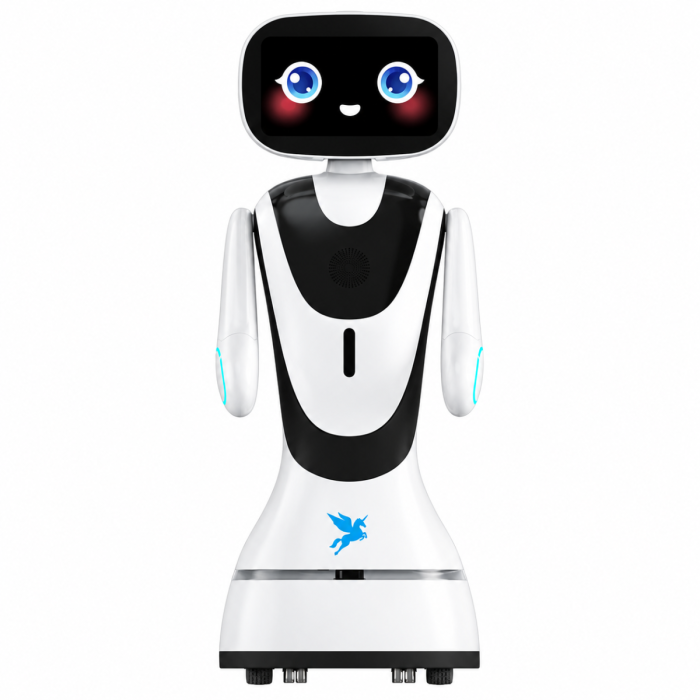
In stock
- BRAND:
- ALPHA ROBOT
- MODEL:
- TIMO
- ORIGIN:
- China
- SKU:
- Alpha-Robot-Timo
Alpha Robotics Timo AI Reception Robot
A reception area is both a welcome point and a working route, so a robot placed there needs consideration beyond its appearance. Alpha Robotics Timo AI Reception Robot brings that practical question into focus: how should a mobile service robot fit around visitors, staff and the space they share? Developed independently by Suzhou Alpha Robotics Co., Ltd., Timo combines a reception-focused product identity with laser navigation, obstacle avoidance and an emergency stop. For a prospective buyer, the useful starting point is the relationship between those features and the proposed location, rather than an assumption that every reception workflow is already covered.
The product is available through this page, by quotation.
Background
The manufacturer and its product lines
Suzhou Alpha Robotics Co., Ltd. independently developed Timo as an AI service robot. The manufacturer's product lines comprise AI service robots, last-mile delivery robots and factory delivery robots. This places reception technology within a broader commercial robotics portfolio, while keeping distinct the different jobs associated with visitor services, delivery and industrial movement.
That distinction matters during procurement. A company producing several categories of robot does not make every model interchangeable. Reception projects centre on the visitor experience and the operation of shared spaces; delivery projects introduce different questions about loads, destinations and handling. Timo should therefore be evaluated against the reception brief, not assigned capabilities simply because another product line addresses them.
Timo's positioning and navigation technology
The identified model is YT-1-13B. Its navigation specification describes 40 meter TOF radar laser navigation, alongside emergency stop and obstacle avoidance. These are relevant starting points for assessing a mobile robot in a public-facing interior, where routes can intersect with waiting areas and pedestrian movement.
The touch screen specification also provides a concrete reference for assessing the proposed user interface. Screen resolution alone does not establish which applications, languages or visitor processes a deployment will include. Those elements belong in the project brief, together with responsibility for content and the procedures staff will follow when a visitor needs assistance.
Technical Specifications
| Specification | Value |
|---|---|
| Dimensions | L460*W460*H1200mm |
| Weight | ~19 kg (≈20 kg depending on battery) |
| Battery capacity — specification table | 15 (AH) |
| Battery — product narrative | 20Ah Lithium battery |
| Positioning accuracy | ± 50 mm |
| Touch screen resolution | 1920*1080 |
| Operation noise at 1 m | ≤55 dB |
| TOF radar laser navigation | 40 meter |
Specifications are as published by the manufacturer and are confirmed against the datasheet at quotation.
The manufacturer has not published the box contents, IP rating, certifications, camera resolution, speaker power or maximum slope climbed; these details are confirmed at quotation.
The battery entries conflict: the specification table lists 15 (AH), while the product narrative describes a 20Ah Lithium battery. These are separate statements about YT-1-13B, not an established choice of battery options. The quotation needs to identify the supplied battery configuration explicitly, with the associated weight, before the purchase specification is agreed.
Read the remaining figures in the context of the installation. Dimensions inform placement and route planning, while positioning accuracy describes a different aspect of movement. The noise figure includes its measurement distance, and the screen resolution describes the display rather than the scope of its software. None of these figures replaces a review of the intended reception workflow.
How should Timo be assessed for a reception area?
Begin with the service problem rather than the novelty of a robot. Identify where visitors arrive, where they wait, which routes staff must keep clear and when a person should take over an enquiry. Reception robotics projects are easier to evaluate when these boundaries are explicit. They also provide a clearer basis for comparing a demonstration with the organisation's actual requirements.
For YT-1-13B, laser navigation, obstacle avoidance and the emergency stop are the concrete movement-related features to examine. A site review should consider furniture, temporary displays, queues and changes to the layout. The presence of obstacle avoidance does not remove the need for an operating procedure, staff oversight or an agreed response when a route becomes obstructed.
Use the screen specification as the beginning of an interface discussion, not its conclusion. Ask for a demonstration of the exact visitor journey proposed for the installation, including the handover to a member of staff. If multilingual content, building-system connections or particular reception software are requirements, put them into the acceptance brief rather than treating the AI reception label as evidence of those functions.
Finally, establish who will own the deployment after installation. Content changes, layout reviews and staff familiarisation are organisational tasks in any reception robotics project. A clearly assigned owner helps keep the equipment aligned with the service it is intended to support, especially when the surrounding space changes.
Who is Alpha Robotics Timo AI Reception Robot for?
Timo belongs on the shortlist of organisations evaluating Reception Robots for visitor-facing premises. Hotel operators, office facilities teams, retail experience managers and public-facing institutions are examples of buyers who can use a structured reception brief to assess this class of equipment. These are potential project settings, not a statement that every site or workflow is suitable.
For hotel and office teams, the central question is how a mobile robot would complement the existing reception desk. For retail and public-service teams, the emphasis may instead be on the relationship between visitor movement, information points and staff availability. Each buyer should specify the intended interaction before deciding whether the proposed configuration meets the requirement.
Teams considering an event setting can also review the Exhibition Robots category as part of their wider research. No comparative specifications establish a better-suited sibling here, so selection should remain tied to a demonstrated workflow rather than an unsupported model ranking.
What is Alpha Robotics Timo AI Reception Robot used for?
- Reception planning: Evaluate a mobile robot's role within an existing visitor welcome process.
- Hotel lobby projects: Assess the proposed service workflow alongside pedestrian routes and reception staff responsibilities.
- Office visitor areas: Explore how a robotic presence would fit with arrival procedures and human assistance.
- Retail experience trials: Review a proposed reception interaction within a customer-facing interior.
- Public-facing venue assessments: Examine placement, operating procedures and the handover to venue staff.
- Exhibition reception concepts: Assess a visitor-facing robotics proposal against the event layout and service brief.
Pricing and Availability
Request a quotation for Alpha Robotics Timo AI Reception Robot with the intended location, operating workflow and required configuration. Include any interface, language or integration requirements so that the proposal addresses the actual project rather than a generic reception concept.
Delivery, customs and support are arranged with the quotation.
Ask for the YT-1-13B battery configuration to be resolved in the purchasing documentation and for the proposed functions to be included in the acceptance criteria. A quotation for the product is available on this page.
Frequently Asked Questions
Who manufactures Timo?
Timo was independently developed by Suzhou Alpha Robotics Co., Ltd. The manufacturer's product lines include AI service robots, last-mile delivery robots and factory delivery robots.
Which model do these specifications describe?
The figures on this page apply to YT-1-13B. They should not be transferred to another robot or treated as specifications for an unnamed trim.
What navigation features does YT-1-13B have?
YT-1-13B has 40 meter TOF radar laser navigation, emergency stop and obstacle avoidance. Assess these features against the intended routes and the site's operating procedures.
Which battery capacity should be used for procurement?
The source specification table gives 15 (AH), while its product narrative states 20Ah Lithium battery. Require the quotation to name the supplied battery explicitly rather than treating the conflicting entries as interchangeable.
What are the dimensions and weight?
YT-1-13B measures L460*W460*H1200mm. Its listed weight is ~19 kg (≈20 kg depending on battery).
Does the screen resolution establish its reception software capabilities?
No. The YT-1-13B touch screen resolution is 1920*1080; application behaviour, languages and integrations require a separate demonstration and an agreed project specification.
Where can I buy Alpha Robotics Timo AI Reception Robot and what does it cost?
Request a quotation through this page. The quotation sets out the proposed configuration and commercial terms, together with arrangements for delivery, customs and support.
Summary
A reception robot needs to belong in the working space, not merely stand out within it. Timo provides a defined starting point through its YT-1-13B dimensions, display resolution and navigation features, while the battery discrepancy requires a clear procurement decision. Match the proposed configuration to visitor routes, staff responsibilities and a demonstrated reception workflow; for that assessment and a quotation, this page is the starting point.